Your home should tell your story. For those of us in the diaspora, creating a space that reflects our Haitian heritage isn’t just about aesthetics—it’s about staying connected to our roots, teaching our children about their culture, and surrounding ourselves with the colors, textures, and symbols that make us feel truly at home.
Whether you’re decorating your first apartment, refreshing a longtime residence, or simply want to infuse more of your heritage into your space, this guide will help you create a home that celebrates Haiti beautifully and authentically.
The Soul of Haitian Aesthetics
Before diving into specific decor ideas, it’s important to understand what makes Haitian design distinctive. Our aesthetic is vibrant, layered, and deeply symbolic. Haitian style embraces bold colors without apology, mixes patterns with confidence, celebrates handcrafted artistry over mass production, incorporates natural materials and textures, and tells stories through every piece.
Haitian homes aren’t about minimalism or neutral palettes. They’re about life, color, warmth, and personality. Your space should feel alive, welcoming, and unapologetically Haitian.
Start With Color: The Haitian Palette
Color is the heartbeat of Haitian design. Our flag’s blue and red provide the foundation, but the full Haitian color palette is much richer. Think of the vibrant hues found in tap-taps, market paintings, and carnival celebrations.
Consider incorporating deep Caribbean blues reminiscent of the ocean surrounding our island, rich reds that honor our revolutionary spirit and flag, sunny yellows and oranges reflecting tropical sunshine and warmth, lush greens echoing Haiti’s mountains and agriculture, and earthy terracottas and browns connecting to our land and clay traditions.
You don’t need to use all these colors in one room. Choose two or three as your primary palette and use others as accents. A living room might feature blue walls with red and yellow accents, while a bedroom could combine terracotta with deep green and cream.
Don’t be afraid of color saturation. Haitian design embraces intensity. An accent wall in a bold shade can transform a neutral space instantly.
Haitian Art as Your Foundation
No Haitian heritage home is complete without Haitian art. Our artistic tradition is world-renowned, and incorporating authentic pieces connects you directly to Haiti’s creative spirit while supporting Haitian artists.
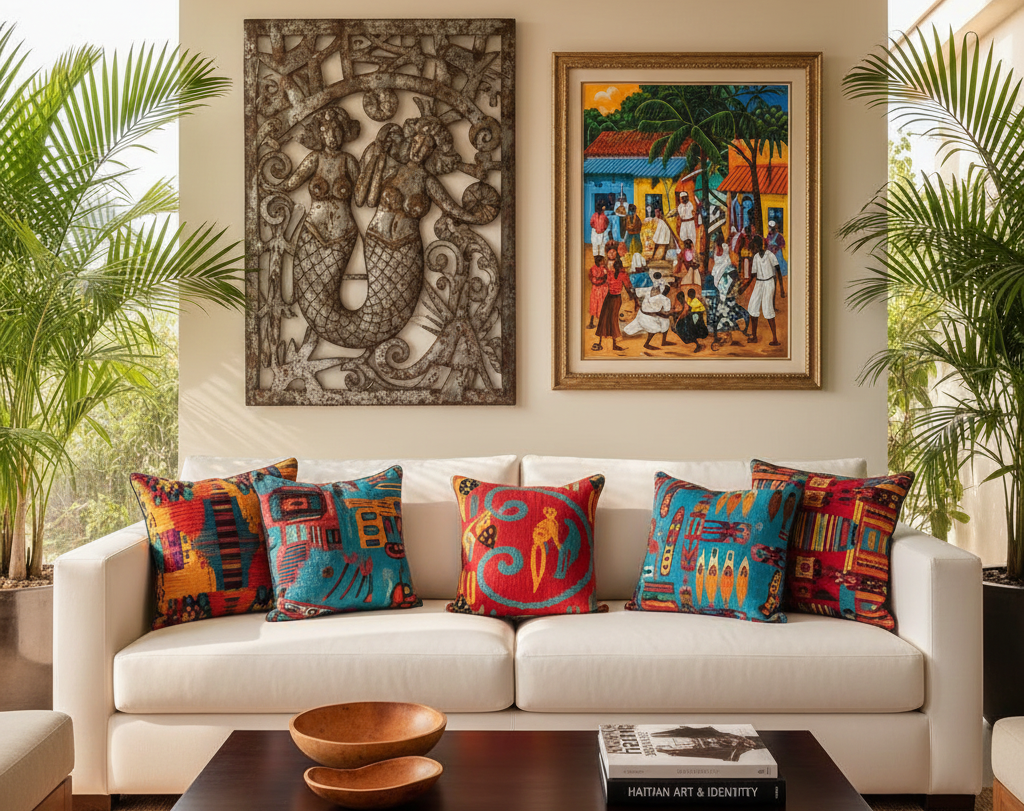
Haitian paintings come in several distinctive styles. Naïve art features bright, flat colors with scenes of daily life, markets, and countryside, created by self-taught artists who developed a signature Haitian style. Vodou-inspired art incorporates spiritual symbols, lwas, and ceremonial imagery with deep cultural significance. Metal art, particularly from Croix-des-Bouquets, transforms recycled oil drums into intricate wall sculptures depicting everything from mermaids to religious scenes. Landscape paintings capture Haiti’s mountains, beaches, and villages with romantic beauty.
Start your collection with one meaningful piece rather than several generic ones. A single stunning Haitian painting can become the centerpiece of your living room, setting the tone for your entire home. Hang it prominently where you’ll see it daily and where guests will immediately recognize your heritage.
Create a gallery wall mixing different Haitian art styles, adding photographs of Haiti, and incorporating your own family photos to create a personal narrative wall that tells your story alongside Haiti’s story.
Textiles That Tell Stories
Haitian textiles bring texture, pattern, and cultural symbolism into your space. They’re also one of the most accessible ways to add Haitian character to any room.
Seek out handwoven fabrics from Haiti’s artisan communities, embroidered pieces featuring traditional patterns and techniques, and flag-making textiles with intricate sequin work originally created for Vodou ceremonies. Look for pieces from artists in Jacmel and other textile centers.
Use these textiles as throw pillows mixing various Haitian fabric patterns on sofas and beds, table runners showcasing embroidered pieces on dining tables or console tables, wall hangings displaying small Drapo Vodou flags or woven pieces as art, throws draping handwoven blankets over furniture for texture and warmth, or curtains using lighter Haitian fabrics to filter light beautifully.
Mix traditional Haitian textiles with solid colors rather than other competing patterns. Let the Haitian pieces be the stars while solid-colored furnishings provide balance.
Bring Haiti’s Nature Indoors
Haiti’s natural beauty—from its mountains to its coastline—can inspire your home’s atmosphere. Incorporate natural elements that echo the Haitian landscape.
Use tropical plants like palm varieties, bird of paradise, philodendrons, or ferns to create an indoor jungle corner that recalls Haiti’s lush vegetation. Natural materials matter too: woven baskets made from sisal or straw for storage and decoration, wooden furniture pieces in mahogany or other tropical woods, bamboo accents in frames, blinds, or decorative pieces, and stone or clay pottery and vessels.
Create a small indoor herb garden with plants used in Haitian cooking: thyme, parsley, and hot peppers. It’s functional and culturally meaningful. Display calabash bowls, traditionally used in Haitian homes, as decorative pieces or functional serving dishes.
The Power of Symbolic Decor
Certain symbols and objects carry deep meaning in Haitian culture. Incorporating them thoughtfully adds layers of significance to your home.
The Haitian flag should be displayed prominently, whether framed, hung on a wall, or incorporated into textile art. It’s a powerful declaration of pride and identity. Catholic and Vodou religious items, if they’re part of your spiritual practice, can include small altars with candles and images, rosaries displayed as art, or Vodou vèvè symbols in artwork or textiles.
Consider hearts, a symbol deeply embedded in Haitian metal art and design, representing love and life. Roosters appear frequently in Haitian art, symbolizing pride and resilience. Ships and boats recall Haiti’s maritime traditions and connection to the sea.
Place these symbolic elements where they feel natural. A metal heart sculpture might hang above your bed, while a rooster painting could energize your kitchen or dining area.
Kitchen and Dining: The Heart of Haitian Home Life
Haitian culture centers around food and gathering. Your kitchen and dining space offer special opportunities for cultural expression.
Display your mortar and pestle, an essential tool in Haitian cooking, as both functional and decorative. Hang woven market bags that recall Haitian markets as wall art or practical storage. Showcase traditional serving pieces like carved wooden bowls, hand-painted ceramic plates, or enamelware in bright colors.
Create a coffee station honoring Haiti’s coffee heritage with traditional coffee-making tools and cups, bags of Haitian coffee displayed decoratively, and art depicting coffee farming or preparation.
In the dining area, use Haitian tablecloths or runners, display bottles of Barbancourt rum as decor (whether you drink or not, it’s an iconic part of Haitian culture), and hang food-themed Haitian art depicting market scenes or traditional dishes.
Consider creating a small spice display with labeled jars of epis ingredients, maggi cubes, and other Haitian cooking essentials. It’s practical and culturally grounding.
Bedroom Retreats With Haitian Soul
Your bedroom should be your sanctuary, and infusing it with Haitian elements creates a deeply personal space.
Choose bedding in Haitian flag colors or incorporate textiles with traditional patterns in your duvet covers, pillowcases, and throws. Above the bed, hang a meaningful piece of Haitian art, display a decorative Drapo flag, or create a photo collage of Haiti and family.
On the nightstand, place a small piece of Haitian pottery or sculpture, keep meaningful books about Haiti or by Haitian authors, and include personal items like inherited jewelry or family heirlooms from Haiti.
Use lighting that creates warmth: consider lamps with bases made from Haitian ceramics or wood. Soft, warm lighting suits the Haitian aesthetic better than harsh, cool light.
Children’s Spaces: Growing Up Connected
If you have children, their spaces offer wonderful opportunities to surround them with their heritage from day one.
Decorate with alphabet prints featuring Haitian Creole letters and words, maps of Haiti made colorful and child-friendly, artwork depicting Haitian children, villages, or folklore, and books by Haitian authors and about Haiti prominently displayed.
Use bedding and textiles in vibrant Haitian colors that energize the space. Create a learning corner with Creole language materials, books about Haitian history, and traditional instruments like maracas or small drums.
Incorporate Haitian dolls, handmade in Haiti, as both toys and decor. They help children see themselves reflected in their surroundings and connect to their culture through play.
Entryway: Making a Statement
Your entryway is the first thing guests see and sets the tone for your entire home. Make it unmistakably Haitian.
Hang a large Haitian painting or metal sculpture as a focal point that announces your heritage immediately. Use a console table made of Haitian wood or painted in vibrant colors, topped with a Haitian textile runner and a bowl of Haitian pottery.
Display a welcome sign in Haitian Creole: “Byenvini” or “Lakay se lakay” (Home is home). Add a mirror with a frame painted in Haitian flag colors or decorated with Haitian motifs.
Place a woven basket for keys and mail, and if you have space, include a small bench with cushions made from Haitian fabrics. The entryway should make everyone who enters feel the warmth of a Haitian home.
Outdoor Spaces: Extending Haiti Outside
If you have a balcony, patio, or yard, bring Haitian style outdoors too. Paint outdoor furniture in bold, tropical colors: turquoise, coral, yellow, or flag colors. Use weather-resistant fabrics in Haitian-inspired patterns for cushions.
Hang string lights to create the festive atmosphere of a Haitian evening celebration. Plant a small garden with plants used in Haitian cuisine: hot peppers, tomatoes, herbs. Add tropical flowering plants that recall Haiti’s climate.
If space allows, create an outdoor dining area with a colorful tablecloth and Haitian music playing softly. This becomes your own little Haiti where you can cook out, host gatherings, and spend time surrounded by your culture.
Shopping Smart: Where to Find Authentic Pieces
Creating a Haitian heritage home works best when you invest in authentic pieces that support Haitian artisans and communities.
Shop directly from Haitian artists when possible through online platforms, art galleries specializing in Caribbean art, or trips to Haiti. Check the Ayisyennet Store and Directory for Haitian-owned businesses and artisans. Visit Haitian cultural events and festivals where artists often sell their work.
Look for Haitian boutiques in cities with large Haitian populations: Miami, New York, Boston, and Montreal often have excellent shops. Support fair trade organizations that work with Haitian artisans ensuring artists receive fair compensation.
When buying online, research sellers to ensure authenticity. Real Haitian art and crafts have distinctive characteristics that mass-produced “Caribbean-style” decor lacks. The patina of hand-hammered metal, the texture of hand-painted canvas, and the irregularities of handwoven textiles all indicate authentic craftsmanship.
Mixing Haitian Heritage With Modern Design
You don’t have to create a museum to honor your heritage. Haitian elements can blend beautifully with contemporary design.
Use Haitian art as statement pieces in otherwise minimalist spaces. A single striking painting or sculpture becomes even more powerful against clean, simple surroundings. Incorporate Haitian colors through accessories that can be easily changed: throw pillows, vases, artwork, and rugs rather than permanent fixtures.
Mix vintage Haitian pieces with modern furniture. A sleek contemporary sofa becomes more interesting with Haitian textile pillows. A modern dining table paired with colorful Haitian art creates dynamic contrast.
The key is intention. Each Haitian piece should feel deliberately chosen and thoughtfully placed rather than cluttered or overwhelming. Quality over quantity creates sophistication.
Budget-Friendly Options
Creating a Haitian heritage home doesn’t require unlimited funds. Start small and build your collection over time.
Begin with paint, the most affordable transformation tool. A bold accent wall in blue or red costs little but makes huge impact. DIY projects offer another avenue: frame Haitian recipes in Creole, create your own artwork inspired by Haitian motifs, or paint furniture in Haitian flag colors.
Print and frame high-quality images of Haiti: landscapes, historical photos, or even flag images until you can invest in original art. Use Haitian fabrics you bring back from Haiti or purchase affordably to make your own pillow covers or table runners.
Repurpose and paint existing furniture using Haitian color palettes and patterns. A plain bookshelf becomes Haitian-inspired with the right paint colors. Shop secondhand for pieces you can transform.
Prioritize one meaningful investment piece per year: a painting, sculpture, or handcrafted item. Build your collection slowly with intention rather than rushing to fill your space.
Maintaining Cultural Authenticity
As you create your Haitian heritage home, aim for authenticity over stereotype. Avoid generic “Caribbean” or “tropical” decor that has nothing specifically Haitian about it. Skip tourist-trap items that appropriate culture without understanding.
Learn the meaning behind symbols and art you display. If you hang a Vodou flag, understand what it represents. If you display certain colors or patterns, know their cultural significance. This knowledge deepens your connection to the pieces in your home.
Rotate seasonal elements: display flag-themed decor prominently around Independence Day and Flag Day, incorporate carnival colors and masks during carnival season, and create special holiday arrangements for New Year’s and other celebrations.
Keep evolving your space as you learn more about Haitian art, history, and culture. Your home can grow with your understanding.
The Emotional Impact
Creating a Haitian heritage home goes beyond aesthetics. It’s about emotional and psychological well-being, especially for those of us far from Haiti.
Surrounding yourself with your culture combats the isolation of diaspora life. It’s a daily reminder of who you are and where you come from. For children growing up in the diaspora, a home filled with Haitian elements normalizes their heritage and builds pride in their identity.
These spaces become sanctuaries where you can breathe deeply and feel at home in your skin. They’re where you can play Haitian music, cook Haitian food, speak Creole freely, and exist fully as yourself without code-switching or explanation.
When homesickness strikes, your surroundings offer comfort. That painting of a Haitian village, those family photos, that flag on the wall they’re anchors keeping you tethered to Haiti even when distance separates you.
Making It Personal
Finally, remember that your Haitian heritage home should reflect your personal story within the larger cultural narrative. Include family heirlooms: the pot your grandmother cooked in, the jewelry your mother brought from Haiti, photographs of ancestors. These irreplaceable items make your space uniquely yours.
Display items from your own visits to Haiti: a piece of art you purchased there, sand from a favorite beach in a decorative bottle, or maps marking places meaningful to your family. Create family photo displays that show your family’s journey from Haiti to wherever you are now, celebrating both your heritage and your evolution.
Write your family’s story and display it somewhere visible. Where in Haiti did your grandparents come from? When did your family immigrate? What traditions have you maintained? This becomes an heirloom for future generations.
Your home is more than a living space. It’s a declaration of identity, a teaching tool for your children, a comfort in challenging times, and a celebration of one of the world’s most vibrant cultures. Every element you add from a small piece of pottery to a large painting strengthens your connection to Haiti and affirms your place in the ongoing story of the Haitian people.
So start today. Paint that wall. Hang that flag. Display that art. Create the Haitian heritage home you deserve one that welcomes you with open arms and whispers “lakay” every time you walk through the door.